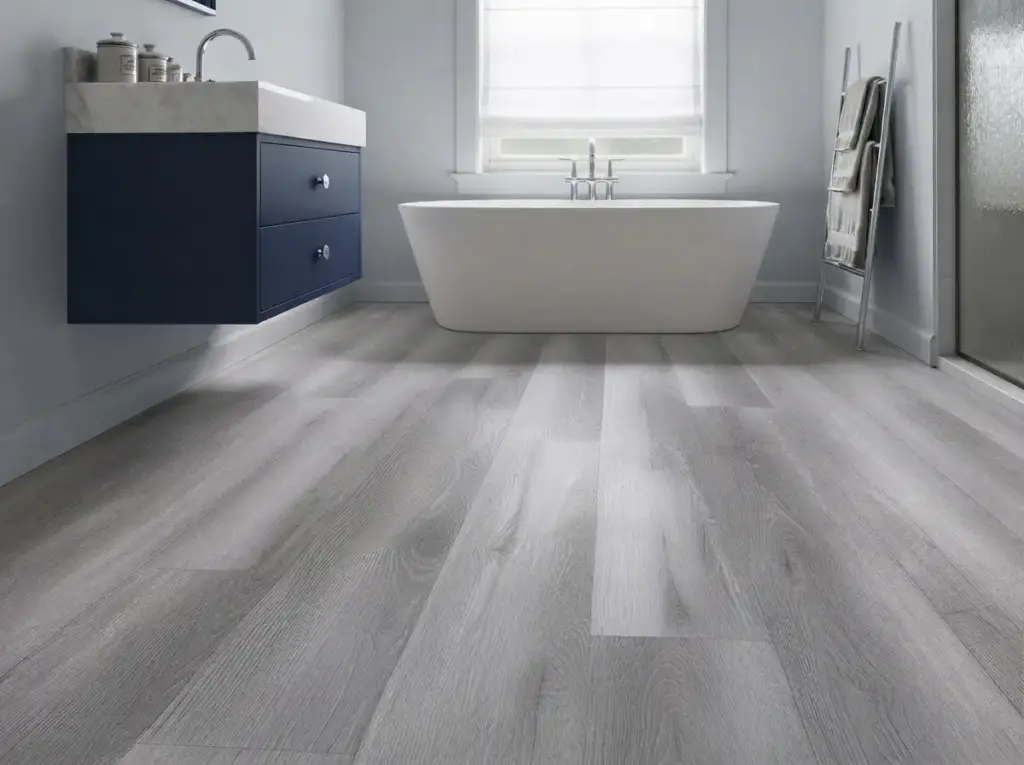
Bathroom floors have a tough job. They face splashes, steam and wet feet every day, so the options are narrower than in other rooms. More homeowners now want flooring that is kinder to the environment as well as practical, and it isn’t always clear which materials fit both needs.
The good news is that there are several sensible choices, each with its own strengths. This guide explains what makes a bathroom floor eco-friendly, compares LVT, cork, linoleum and tiles, and shares simple ways to help your new floor last as long as possible.
The Greenest Bathroom Floor Is The One That Lasts
When people ask what the best flooring for a bathroom is from an environmental point of view, the honest answer is the one you won’t need to replace for many years. Every time a floor is ripped up, it creates waste and uses up materials and energy to make a new one. A durable floor that suits your bathroom and still looks good in ten or twenty years is often greener than a “natural” option that gets damaged by water after a couple of years.
Here are three simple things to look for:
- Sensible materials: Natural, renewable or recycled content where possible.
- Good water resistance: A floor that copes with splashes and steam without swelling or lifting.
- A long lifespan: Tough enough to handle daily use for many years.
It’s a good idea to compare a few options side by side before you decide, and to ask how each one is made and how long it’s expected to last.
LVT Is a Practical, Long-Lasting Option
LVT, or luxury vinyl tile, is a popular answer when homeowners want a bathroom floor that’s warm, waterproof and easy to live with. It comes in realistic wood and stone designs, feels comfortable underfoot and only needs a quick mop to keep it clean. It can often be laid over an existing floor, which saves on the waste and mess of lifting the old one. The LVT range at Urmston Carpets is a good place to compare designs and see samples in person.
It’s worth being honest that LVT is a plastic-based product, so it isn’t a natural material like cork or linoleum. Its eco strengths come from its long life and practicality. Ask about options with recycled content, and choose a good quality product from a trusted brand, as cheaper versions tend to wear out faster. A well-fitted LVT floor can give many years of reliable use, which is why it’s often the answer to what is the best flooring for a bathroom that sees heavy daily use.
Cork Is a Natural and Cosy Choice
Cork comes from the bark of the cork oak tree. The bark is stripped by hand every nine years or so, and it grows back, which means no trees are cut down to make the flooring. It feels warm and slightly soft underfoot, which is a real bonus on cold mornings, and it naturally resists mould.
Cork does need some care in a bathroom. Choose tiles or planks that come pre-sealed, and ask your fitter about adding an extra coat of sealant once it’s down to keep water out of the joins. It works best in bathrooms with a shower screen or enclosure, where splashing is kept to a minimum, and you may need to reseal it every few years to keep it in good condition.
Linoleum Is Made From Natural Ingredients
Real linoleum is made from linseed oil, wood flour, cork dust and natural resins on a jute backing. This makes it one of the most natural hard floors available, and it can break down at the end of its life. It’s also hardwearing, with a good quality linoleum floor often lasting 25 years or more when it’s looked after.
Many people mix up linoleum and vinyl, but they’re quite different products. When shopping, check the label to make sure you’re getting genuine linoleum. For a bathroom, sheet linoleum with sealed joins is usually a better choice than tiles, as it leaves fewer gaps for water to seep through. Ask your fitter to seal the edges carefully around the bath, shower and toilet.
Tiles Can Last for Decades
Ceramic and porcelain tiles take a lot of energy to make, but their lifespan makes up for it. A well-laid tiled floor can last 50 years or more, and it’s fully waterproof, easy to clean and resistant to scratches. For many homes, that makes tiles one of the most sustainable choices over time.
A few tips can make a tiled floor even greener:
- Look for tiles made with recycled content, which many manufacturers now offer.
- Choose a classic style and colour that won’t date quickly.
- Buy a few spare tiles so you can replace a cracked one instead of the whole floor.
If cold floors put you off, tiles pair well with underfloor heating, which spreads warmth evenly across the room.
Floors to Avoid in a Bathroom
Some flooring types can struggle with the damp conditions in a bathroom and may need replacing much sooner than you’d like. It’s best to avoid:
- Solid wood: Beautiful, but it can swell, warp and stain when exposed to water and steam.
- Carpet: It soaks up moisture and holds on to damp, which can lead to mould and unpleasant smells.
- Cheap, thin flooring: Budget products often lift, peel or tear quickly, creating more waste in the long run.
Choosing something that suits the room from the outset is one of the easiest ways to keep your bathroom floor eco-friendly.
Simple Ways to Help Your Bathroom Floor Last Longer
Once you’ve settled on what is the best flooring for a bathroom in your home, a few everyday habits will help it stay in good condition:
- Keep the room ventilated. Use your extractor fan or open a window during and after showers.
- Wipe up puddles. Standing water can damage joins and edges over time.
- Use a bath mat. It catches drips and protects the floor where you step out.
- Clean gently. Stick to mild cleaners and avoid harsh chemicals that can wear down the surface.
Professional fitting also makes a big difference. A skilled fitter will check the subfloor, seal edges properly and make sure there are no gaps for water to get in. This helps prevent damage that could otherwise mean replacing the floor early.
Find a Greener Bathroom Floor That Lasts
There’s no single answer that suits every bathroom, but there are plenty of good options. Good quality LVT offers a warm, waterproof and practical choice, cork and linoleum are made from natural materials, and tiles can last for decades. Whichever you choose, the greenest floor is one that suits your bathroom and stays looking good for years.
The easiest next step is to see the options in person. Order samples, compare how they look and feel in your own bathroom, and book a measure so you have an accurate quote. With the right choice and a little care, your new floor will serve you well for a long time.